The Counter-Reformation
The Catholic Church was soon trying to reform itself as well by strengthening its teachings and structure. This movement became known as the Counter-Reformation.
The Society of Jesus
During the Counter-Reformation, the Church founded many new religious orders. One of the most successful and influential was the Society of Jesus, also known as the Jesuits. It was founded by Ignatius Loyola, who was a former solider. He ran the Jesuits like a military order. The Jesuits accomplished a lot to help reform the Church. They trained the priests better, cared for the sick and poor, spread the Catholic faith to new countries, found schools and universities, gave out many scholarships, and acted as influential advisers to kings and popes. Their actions helped to strongly revive the moral authority of the Church and strengthen its structure.
The Council of Trent
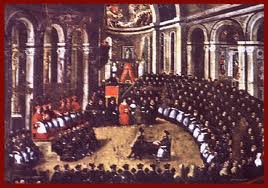
The Council of Trent was a series of meeting called by Pope Paul III to revive the moral authority of the Church and stop the spread of Protestantism. At the meetings, the Council criticized the views and ideas of Protestantism. For example, they criticized Luther's view that faith alone would bring salvation. They said that good deeds and completing scaraments were needed as well. The Coulcil also called for many major reforms in its practices, including better training for and stricter rules for the priests.
The Inquisition
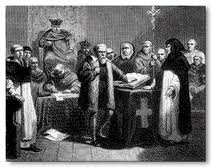
The Inquistion was a court set up byt he Church that searched for suspects of heresy, or religious ideas that were not accepted by the Church. Suspects were questioned and often tortured or killed. Protestants were considered heretics and many fled for their lives. The Church further tried to prevent the spread of Protestantism by banning many Protestant books including books by Martin Lutehr, John Calvin, and William Tyndale.